What Size Lawn Mower for 1 Acre? Best Deck Size (42–46 Inch) + Mistakes to Avoid
If you're wondering what size lawn mower for 1 acre, the best choice for most users is a 42–46 inch deck riding mower or zero-turn mower. That size usually gives the best balance of cutting efficiency, maneuverability, and operating comfort for a property of this size.
The reason is simple: a mower that is too small will take too long and increase effort, while a mower that is too large can become less practical around trees, borders, and tighter residential layouts. To make the right decision, you need to look beyond lawn size alone and also consider terrain, obstacles, mowing frequency, and whether you are maintaining a simple residential lawn or a more demanding site.
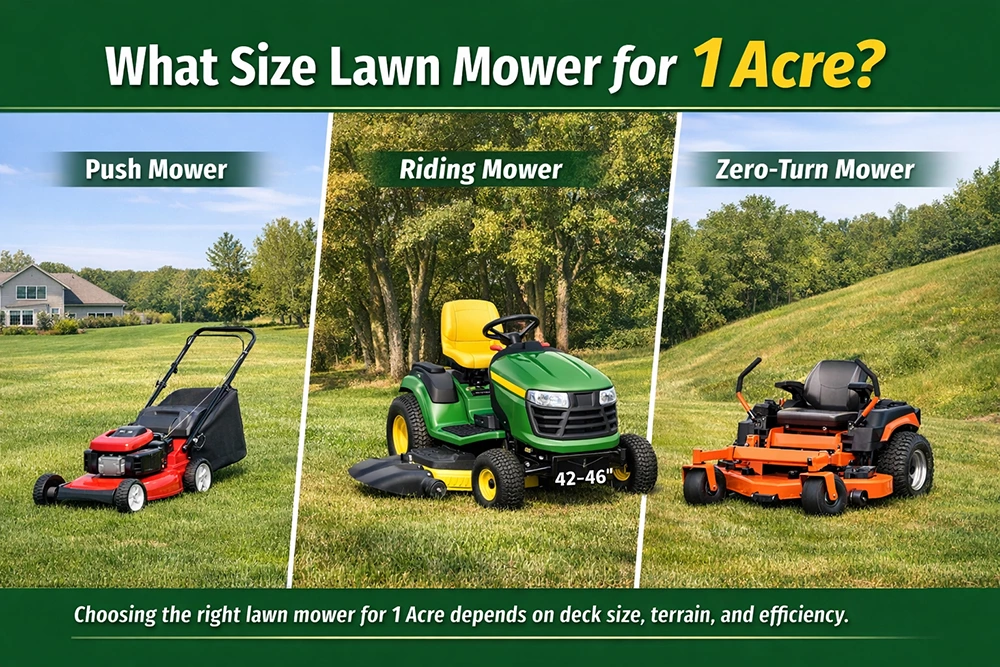
Quick Answer: Best Lawn Mower Size by Lawn Area
| Lawn Size | Recommended Mower | Deck Size | Estimated Time |
|---|---|---|---|
| 1 acre | Riding mower / Zero-turn mower | 42–46 inch | 45–60 min |
| 1/2 acre | Self-propelled mower / Small riding mower | 30–42 inch | 30–45 min |
| 1/4 acre | Push mower | 20–22 inch | 20–30 min |
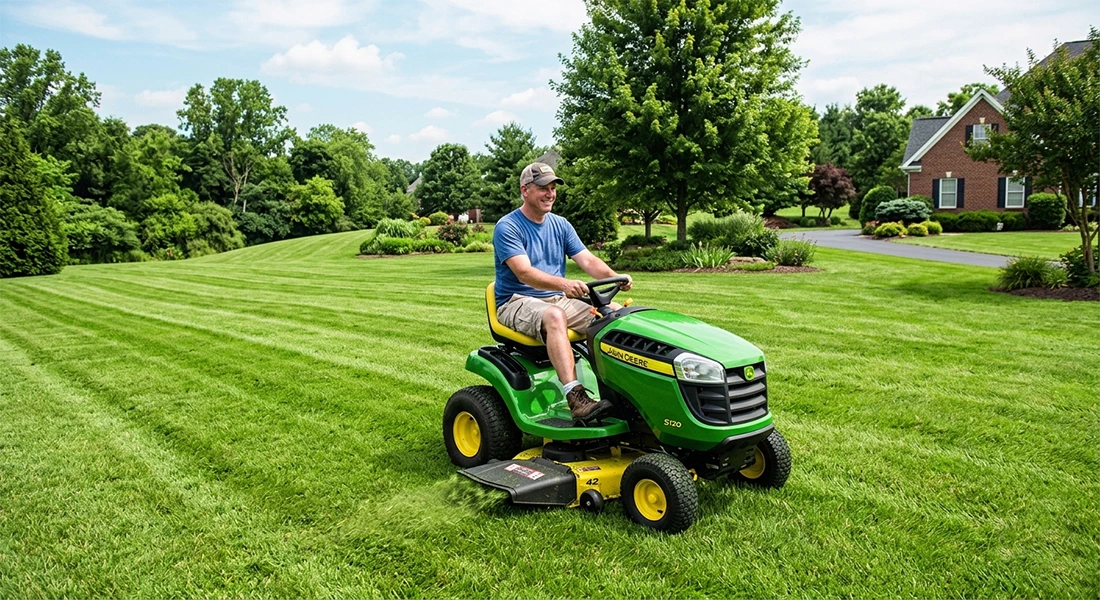
For most homeowners, that means a lawn mower for 1 acre should not be selected by price alone. It should be selected by how efficiently it can finish the work without creating unnecessary operator fatigue or poor cut quality.
Why Deck Size Matters for a 1-Acre Lawn
Deck size directly affects how efficiently you can mow, but choosing the largest option is not always the best decision.
On a 1-acre property, a smaller deck (under 38 inches) can still get the job done, but it usually requires more passes and significantly more time. While this may suit budget-focused buyers, it quickly becomes inefficient for regular mowing.
On the other hand, very wide decks (over 50 inches) are designed for open spaces. In typical residential settings with trees, fences, or landscaping features, they often feel harder to control and less practical.
For most homeowners, a 42–46 inch deck offers the best balance. It improves mowing speed compared to smaller machines while remaining manageable in everyday yard layouts.
Choosing the Right Mower for Your Lawn Conditions
The right mower depends less on size alone and more on how your land is structured.
If your lawn is flat and mostly open, a zero-turn mower can significantly reduce mowing time thanks to its maneuverability.
For mixed layouts with moderate obstacles, a riding mower is usually the most practical all-round choice, balancing control, comfort, and efficiency.
Push mowers can still handle 1 acre, but they are generally only suitable when budget is the main concern rather than time or labor.
If your property includes slopes, rough ground, or uneven terrain, standard machines become less effective. In these cases, a remote-controlled mower designed for slopes can provide better traction, safety, and overall performance.
If the lawn includes banks, ditches, rough edges, wet areas, or uneven ground, traditional mowers become less efficient and less safe. In those cases, a remote-controlled mower for slopes can be a better solution for traction, operator safety, and productivity.
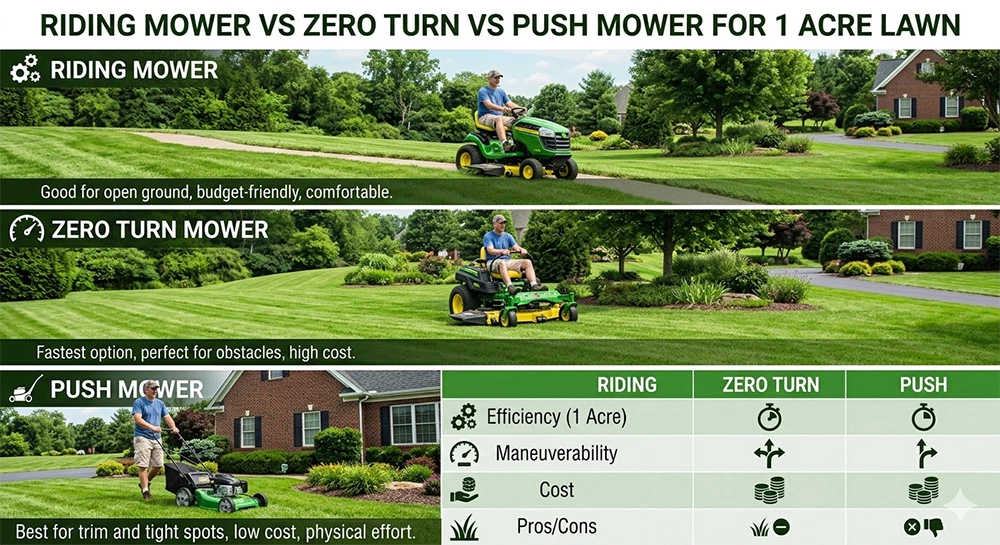
Lawn Mower Type Comparison for 1 Acre
| Type | Speed | Cost | Best For | Main Limitation |
|---|---|---|---|---|
| Push mower | Slow | Low | Budget users and simple lawns | High labor and long mowing time |
| Riding mower | Medium | Medium | Most residential 1-acre properties | Less agile than zero-turn in open areas |
| Zero-turn mower | Fast | High | Flat, open lawns | Not ideal for more difficult terrain |
| Tracked remote mower | High | Professional | Slopes, uneven ground, commercial sites | More specialized than a standard homeowner mower |
If your site is more demanding than a normal residential lawn, Averdyn’s product structure gives you a clean upgrade path: triangular track models for steep slopes, tank-type tracked models for demanding ground conditions, and four-wheel drive remote mowers for lighter routine landscape work.
- Triangular track mower for steep slopes
- Four-wheel drive remote mower for routine grounds maintenance
What Size Lawn Mower for 1/2 Acre and 1/4 Acre?
Many buyers asking about 1 acre are also comparing nearby property sizes. In general:
- What size lawn mower do I need for 1/2 acre? A 30–42 inch mower is usually enough.
- What size lawn mower do I need for 1/4 acre? A 20–22 inch push mower is usually sufficient.
This matters because buyers often overspend when they choose mower size based on “more is better” instead of real lawn area and layout.
Standard Lawn Mower Dimensions: What Buyers Often Misunderstand
One common mistake is confusing overall mower size with cutting deck size. When people search for standard lawn mower dimensions, they often mean deck width, but practical usability also depends on total machine width, turning radius, and how easily the mower works around obstacles.
That is why a mower that looks more powerful on paper is not always the better mower for a 1-acre property.
Common Mistakes to Avoid When Choosing a Lawn Mower
One of the most common mistakes is focusing only on price. A cheaper mower may save money upfront, but it often costs more in time, effort, and long-term usability.
Another issue is ignoring terrain. A machine that works well on flat ground may struggle or even become unsafe on slopes or uneven areas, so matching the mower to your land conditions is essential.
Oversizing is also a frequent problem. While a larger deck can improve cutting speed, it can quickly become inconvenient in tighter spaces with trees, fences, or landscaping features.
Finally, many buyers underestimate their actual usage needs. If the property includes orchards, solar sites, or rough access areas, standard residential mowers may not deliver the durability or performance required.
When Standard Mowers Are Not Enough
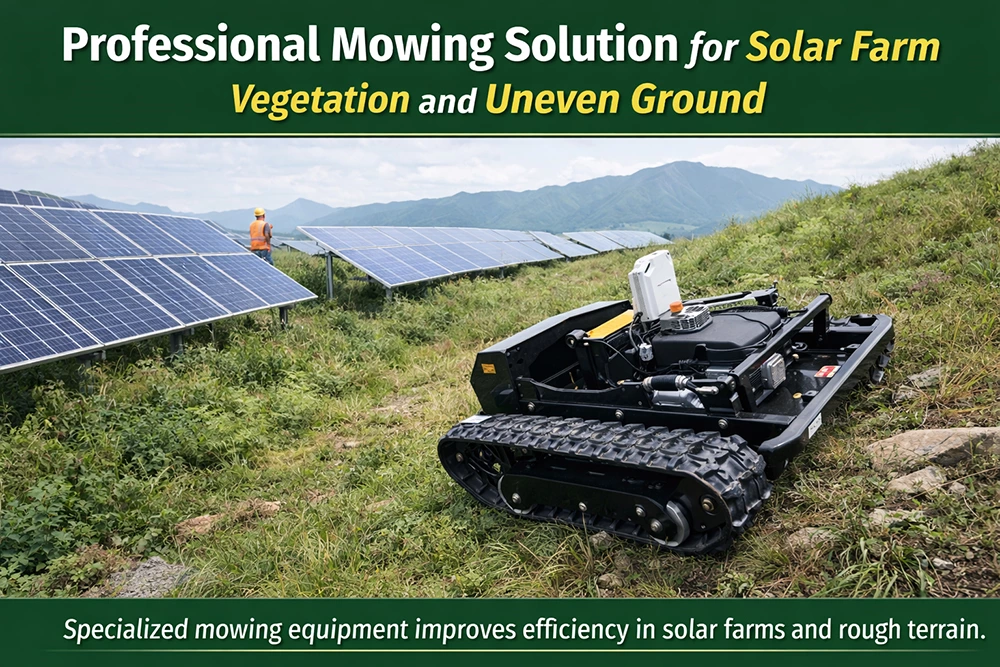
For steep slopes, solar farms, rough vegetation, and uneven working surfaces, professional mowing equipment becomes more relevant than consumer lawn mower comparisons. If your “1 acre” includes difficult terrain rather than just open grass, that difference matters a lot.
You can explore these paths here:
- Professional mowing equipment for demanding terrain
- Vegetation management case for solar farms
- Lawn mower buying mistakes and timing advice
if the actual work includes steep ground, wet grass, thick growth, or safety-sensitive terrain, the best answer changes. In that case, a more specialized option may offer better real-world value than a standard mower that looks cheaper at checkout.
For example, if your conditions resemble banks, rough paths, or site-maintenance work rather than a clean suburban yard, compare with a triangular track mower for steep slopes or a four-wheel drive remote mower for routine grounds maintenance.
FAQ
What size mower is best for 1 acre?
A 42–46 inch riding mower or zero-turn mower is the best choice for most 1-acre lawns.
Can I mow 1 acre with a push mower?
Yes, but it will usually take longer and require significantly more effort than a riding mower.
Is a zero-turn mower worth it for 1 acre?
Yes, if the lawn is mostly flat, open, and easy to navigate.
What size mower do I need for 1/2 acre?
A 30–42 inch mower is usually ideal for a 1/2-acre property.
What size mower do I need for 1/4 acre?
A 20–22 inch push mower is usually sufficient for a 1/4-acre lawn.
Final Recommendation
If your property is a typical 1-acre lawn, start with a 42–46 inch riding mower or zero-turn mower. That is the most practical answer for most buyers.
If your site includes steep slopes, uneven ground, or more demanding maintenance conditions, move beyond standard consumer mower logic and look at equipment built for those environments.
Need a better solution for difficult terrain? Visit Averdyn’s mowing equipment page to compare remote-controlled options for slopes, vegetation control, and challenging outdoor work.