How to Mow a Lawn properly: Best Height, Patterns, Timing & Mistakes
Learning how to mow a lawn properly is about far more than making grass look shorter. Correct mowing helps build a healthier root system, improve lawn density, reduce weed pressure, and create a cleaner, more professional-looking finish.
Whether you maintain a home lawn, a commercial landscape, an orchard, a slope, or a large green space, the way you mow directly affects turf health, operating efficiency, and long-term maintenance cost.
In this guide, you will learn the right mowing height, the best time to mow, the safest mowing pattern, the most common mistakes to avoid, and how to choose the right mower for flat ground, slopes, and rough terrain.
Quick Answer: What Is the Correct Way to Mow a Lawn?
The correct way to mow a lawn is to cut only when the grass is mostly dry, use sharp blades, follow the one-third rule, keep the grass at an appropriate height, vary your mowing pattern, and match the mower to the terrain and working conditions.
- Mow when the grass is dry or only slightly damp
- Never remove more than one-third of the blade height at one time
- Keep mower blades sharp for a clean cut
- Adjust mowing height based on grass type, season, and stress level
- Change direction regularly to avoid ruts and leaning grass
- Use a mower suitable for your terrain, especially on slopes or uneven ground
Why Proper Mowing Matters for Lawn Health
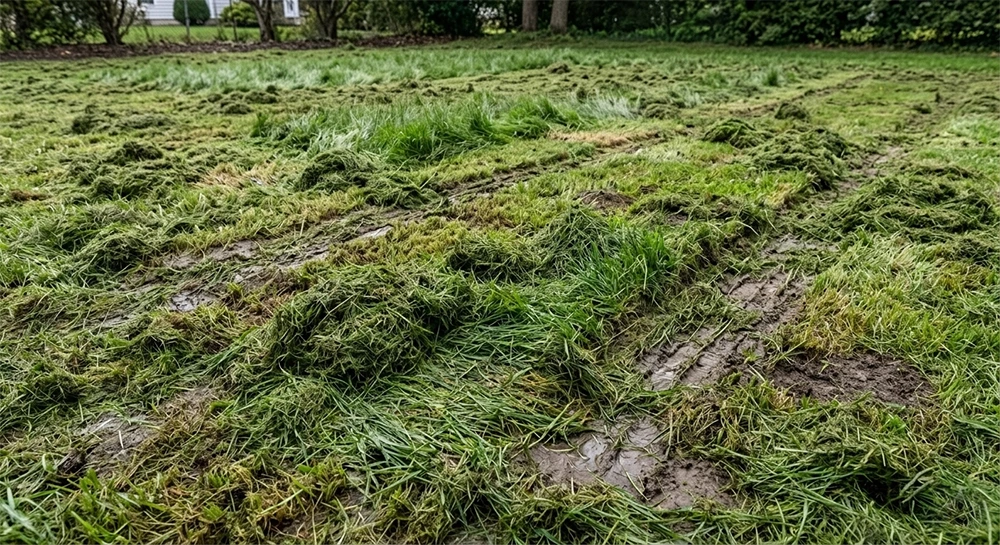
Many lawn problems begin with poor mowing habits. Cutting too low weakens the plant, exposes soil to heat, and encourages shallow roots. Mowing with dull blades tears grass instead of cutting it cleanly, which can make the lawn look brown and stressed. Repeating the same pattern every time can also cause compaction and uneven growth.
Proper mowing supports stronger grass recovery, better visual appearance, and more consistent growth. It can also reduce unnecessary labor, improve efficiency, and lower equipment strain.
Step-by-Step: How to Mow a Lawn Properly
Step 1: Choose the Right Mower for the Job
The best mowing result starts with the right equipment. A small flat residential lawn and a steep, uneven, or high-growth site do not require the same machine.
- For routine lawn care, property maintenance, and lighter commercial work, a compact remote mower with easy control and flexible cutting height is often the most practical option.
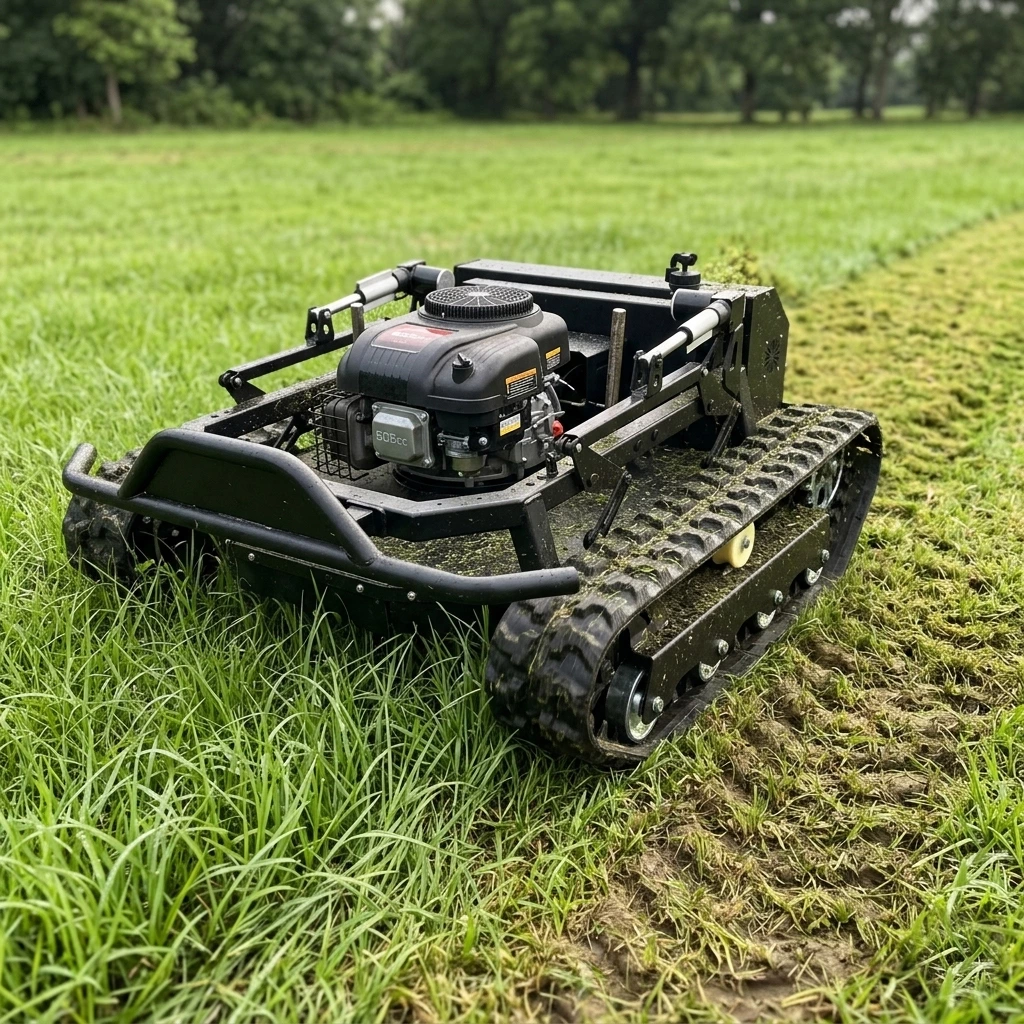
- For slopes, embankments, rough ground, and more demanding terrain, tracked mowers provide stronger traction, better balance, and safer remote operation.
- For overgrown areas, orchard rows, and challenging vegetation management work, a more robust tracked platform is usually the better choice.
If your mowing work includes routine landscaping, residential grounds, or municipal maintenance, you can naturally reference a solution such as Averdyn’s 550W Series sliding four-wheel drive remote-controlled lawn mower, which is designed for remote operation, adjustable cutting height, and everyday mowing efficiency.
If your work regularly involves slopes, embankments, orchards, and complex surfaces, a tracked solution such as Averdyn’s tank-type parallel tracked lawn mower is more suitable because it is positioned for stronger terrain stability and demanding vegetation work.
Step 2: Inspect Lawn Conditions Before You Start
Always inspect the lawn before mowing. This reduces safety risks and improves cutting quality.
- Remove branches, stones, wire, toys, and metal debris
- Check whether the grass is dry, wet, or heavily overgrown
- Look for holes, exposed roots, soft ground, and slippery slopes
- Make sure the mowing route is clear before starting
This step is especially important after rain, on irregular terrain, and in commercial sites where hidden obstacles can damage blades or interrupt work.
Step 3: Set the Correct Mowing Height
Cutting height is one of the most important decisions in lawn maintenance. In general, slightly taller grass is healthier than grass cut too short. Taller turf shades the soil better, retains moisture more effectively, and develops stronger roots.
| Condition | Recommended Approach |
|---|---|
| Normal growing conditions | Maintain a moderate mowing height for even, healthy growth |
| Hot summer weather | Keep grass slightly taller to reduce heat stress |
| Dry conditions | Avoid cutting too low to protect moisture retention |
| Fast spring growth | Mow more often instead of cutting shorter |
| Weak or stressed lawn | Raise the cutting height until recovery improves |
If you are mowing varied terrain or mixed grass conditions, a machine with flexible cutting height adjustment is especially useful. For example, the 550 Series remote mower on your site is presented with a 20–180 mm cutting height range, which makes it easier to adapt to different mowing conditions without forcing one fixed cutting strategy.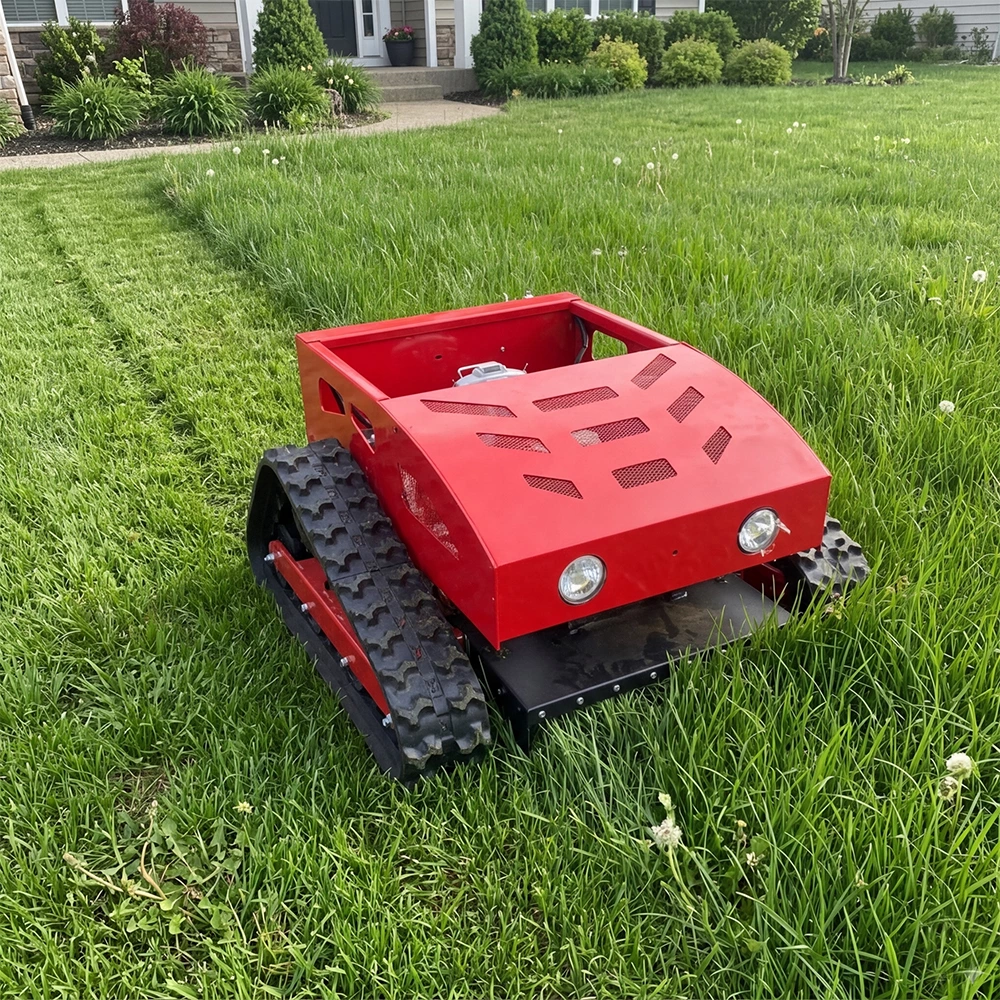
Step 4: Follow the One-Third Rule
Never remove more than one-third of the grass blade in a single mowing session. This is one of the most important lawn-care rules because cutting too much at once shocks the grass and slows recovery.
If the lawn is overgrown, mow in stages. Start higher, then lower the deck gradually over multiple sessions instead of scalping the lawn in one pass.
Step 5: Use Sharp Blades
Sharp blades create a clean cut, while dull blades tear the grass. Torn grass tips often turn brown, making the lawn look unhealthy even right after mowing.
If you notice ragged grass tips, clumping, or poor cutting consistency, inspect the blade condition before adjusting anything else.
Step 6: Mow in a Consistent Pattern
Good mowing patterns improve both appearance and efficiency. Start by cutting the perimeter, then fill the center with straight, slightly overlapping passes. Maintain a steady speed and avoid sharp turns that can damage turf.
- For rectangular lawns, use long straight lines
- For curved landscapes, follow smooth contour lines
- Overlap slightly to avoid missed strips
- Slow down near edges, trees, fences, and obstacles
Step 7: Change Direction Regularly
Do not mow the same direction every time. Alternating your mowing pattern helps prevent grass from leaning in one direction and reduces the chance of visible wheel lines or compaction marks.
A simple rotation works well:
- Week 1: north to south
- Week 2: east to west
- Week 3: diagonal left
- Week 4: diagonal right
Step 8: Manage Grass Clippings Correctly
Light, dry clippings can usually be left on the lawn because they break down and return nutrients. However, thick piles of wet or heavy clippings should be removed to avoid smothering the grass beneath them.
If the lawn is wet, overgrown, or extremely dense, collecting or redistributing clippings may be necessary for a cleaner result.
Best Time to Mow a Lawn
The best time to mow is usually mid-morning, after dew has dried but before the hottest part of the day. Late afternoon is also a good option if temperatures are moderate and the grass is dry.
Avoid mowing at these times whenever possible:
- Early morning, when dew makes grass wet and slippery
- Immediately after rain
- During extreme midday heat, when grass is already under stress
- Late evening, when the lawn may stay damp overnight.
How Often Should You Mow?
Mowing frequency depends on growth rate, not a fixed calendar. Fast spring growth may require more frequent mowing, while slower growth in hot or dry periods usually means longer intervals.
A practical rule is simple: mow often enough that you never need to remove more than one-third of the grass blade at one time.
How to Mow Different Lawn Conditions
How to Mow a Wet or Damp Lawn
Wet grass is harder to cut cleanly. It can clog the deck, create uneven strips, leave clumps, increase slip risk, and place more stress on both the turf and the machine.
If mowing cannot be delayed, take a more conservative approach:
- Raise the cutting height slightly
- Reduce travel speed
- Clean clumps promptly
- Use a machine with stable traction and safe remote operation when the terrain is difficult
How to Mow a Lawn on a Slopeor sites such as slopes, solar farms, orchards, and other hard-to-access areas where mowing conditions are not always ideal, tracked remote units can be a far safer and more practical solution than conventional walk-behind or ride-on equipment.
Slopes require special attention. Safety should always come before speed. The steeper and rougher the ground, the less suitable conventional mowers become.
- Inspect the slope before starting
- Avoid sudden turns or abrupt speed changes
- Do not mow when the ground is slippery
- Use equipment with better traction and better operator safety control
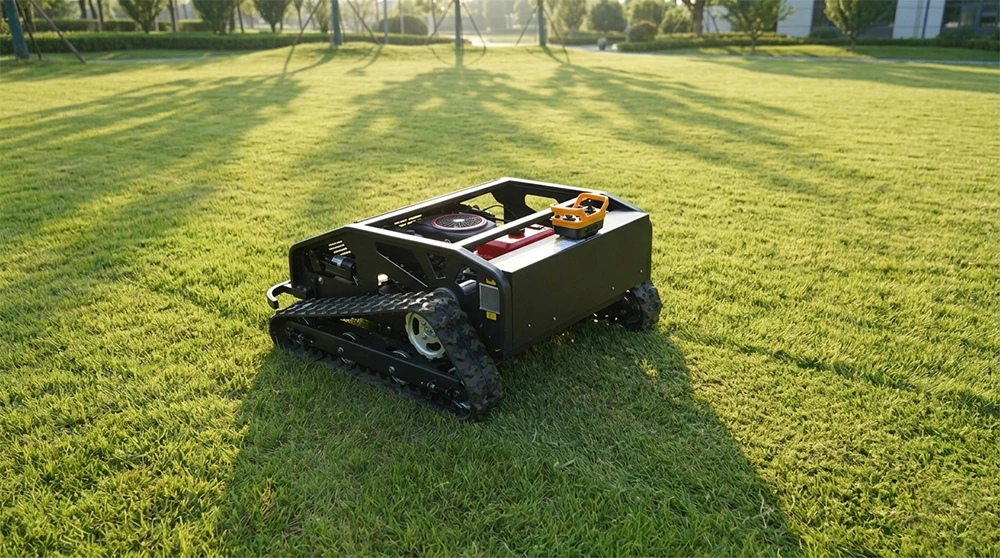
If slope mowing is part of your regular work, this is where a tracked remote mower becomes a meaningful equipment upgrade rather than just a convenience. For example, the Black Panther Series on your site is presented as a tracked remote model for demanding terrain, obstacle-crossing ability, and safer distance operation in more complex environments.
How to Mow an Overgrown Lawn
Overgrown lawns should never be cut down to the target height in one pass. Doing that will scalp the lawn, overload the mower, and leave behind heavy clumps.
- Raise the deck and make the first pass
- Let clippings clear if needed
- Lower the cutting height gradually on a second pass
- Repeat over multiple sessions if the lawn is extremely tall
This staged method protects the grass and produces a much cleaner finish.
Common Lawn Mowing Mistakes to Avoid
- Cutting the grass too short
- Mowing when the lawn is wet
- Using dull blades
- Mowing too fast for the conditions
- Ignoring slope safety and rough terrain risk
- Using the wrong mower for the site
- Repeating the same pattern every time
- Removing too much grass in a single session
Best Mowing Pattern for a Professional Finish
If appearance matters, your mowing pattern is just as important as your cutting height. Straight lines, deliberate overlap, and regular direction changes create a cleaner, more professional result.
For larger open spaces, the most effective approach is usually:
- Cut a border around the outside edge first
- Mow the main area in long straight passes
- Alternate directions on future sessions
- Finish edges and detail areas carefully
On commercial sites, orchards, embankments, and difficult access areas, the ability to keep a consistent line can depend heavily on machine stability and control precision. In those scenarios, a remote-controlled unit can help the operator maintain both safety and mowing consistency more effectively.
What Type of Mower Is Best for Different Terrain?
| Terrain or Use Case | Best Mower Type |
|---|---|
| Small flat home lawn | Standard mower or compact remote mower |
| Routine landscape and property maintenance | Remote four-wheel drive mower |
| Slopes, embankments, rough ground | Tracked remote mower |
| Orchards, solar farms, mixed terrain | Professional tracked remote mower |
| Overgrown or complex vegetation management | Heavy-duty tracked platform |
FAQ: Lawn Mowing Questions
What is the best height to mow a lawn?
The best mowing height depends on grass type, season, and lawn stress level, but in most cases a moderate to slightly taller height is healthier than cutting too short.
Is it better to mow fast or slow?
A steady, controlled speed is better than mowing too fast. Slower movement improves cut quality and reduces missed strips, especially in dense or uneven grass.
Should you mow wet grass?
It is usually better to wait until the lawn dries. Wet grass often leads to clumping, uneven cutting, and a higher risk of slipping or turf damage.
How can I make my lawn look professionally mowed?
Use sharp blades, mow in straight overlapping lines, maintain the correct height, and change direction regularly to create a cleaner, more uniform finish.
What mower is best for slopes?
For steeper or rougher terrain, a tracked remote mower is generally a safer and more stable choice than a conventional mower.
How often should I mow my lawn?
Mow often enough that you never remove more than one-third of the grass blade in one session. Growth rate, weather, and season matter more than a fixed weekly schedule.
Can mowing improve lawn health?
Yes. Correct mowing encourages stronger roots, denser turf, and better visual quality over time.
Conclusion
If you want a healthier, better-looking lawn, proper mowing is one of the most important habits to get right. The core rules are simple: mow when conditions are suitable, avoid cutting too short, keep blades sharp, vary your pattern, and use the right mower for the terrain.
For ordinary lawns, correct technique alone can dramatically improve results. For slopes, rough ground, orchards, embankments, and large-scale vegetation work, equipment choice becomes just as important as mowing technique.