Are Electric Lawn Mowers Any Good? Pros, Cons, Performance & When They’re Worth It
Quick answer: Yes—electric lawn mowers are a very good choice for many homeowners and light-duty users. They are quieter, easier to start, and usually easier to maintain than gas mowers. But they are not the best solution for every mowing job. If you manage steep slopes, wet grass, dense overgrowth, orchards, solar farms, or large commercial sites, a standard walk-behind electric mower may not deliver the traction, endurance, or site adaptability you need.
This guide explains where electric lawn mowers perform well, where they begin to struggle, and when a more specialized remote-controlled mower becomes the better long-term investment.
Quick Verdict
| Question | Short Answer |
|---|---|
| Are electric lawn mowers any good? | Yes, especially for small to medium lawns with routine mowing schedules. |
| Are electric lawn mowers worth it? | Usually yes, if you value lower noise, easier startup, and reduced maintenance. |
| Are electric mowers good for large lawns? | Sometimes, but they become less efficient as site size and workload increase. |
| Are electric lawn mowers good on hills? | Not usually the best option for steep or risky slopes compared with tracked remote mowers. |
| Are electric lawn mowers good in wet grass? | Only to a point. Wet, dense, or tall grass often exposes the limits of standard consumer electric mowers. |
Why This Question Matters More Than It Seems
Many buyers searching are electric lawn mowers good, are electric mowers worth it, or are battery powered lawn mowers any good are not looking for a simple yes-or-no answer. They are trying to make a purchase decision. They want to know whether an electric mower will save time, reduce hassle, and handle their actual lawn conditions—or whether it will become an underpowered compromise.
That distinction matters. A flat suburban lawn and a rough commercial vegetation-control site are not the same job. A machine that feels efficient in a small residential yard may be the wrong tool for wet grass, uneven terrain, long mowing sessions, and slope work. That is why the best answer is not “electric is always better” or “gas is always stronger.” The real answer depends on terrain, workload, grass conditions, labor safety, and how often the mower is expected to perform.
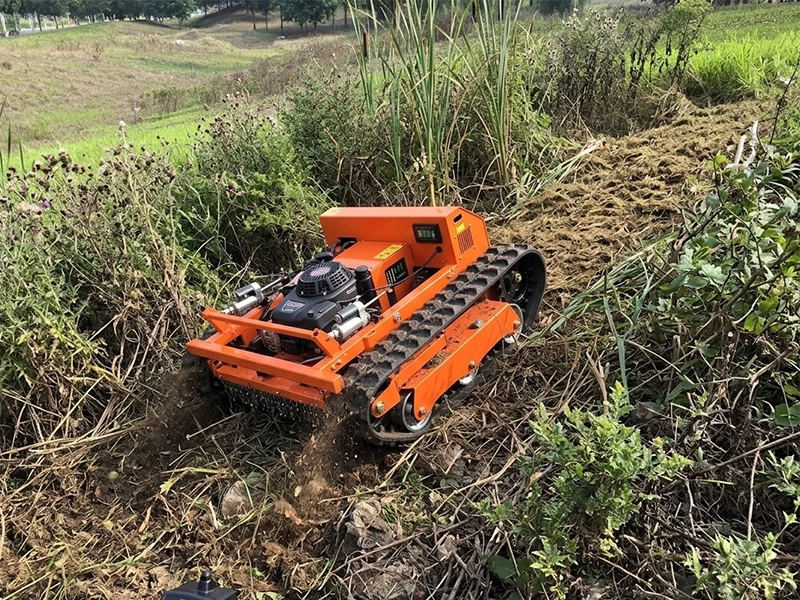
Why Electric Lawn Mowers Are Becoming More Popular
Electric mowers have become increasingly popular, largely because they offer a quieter and more convenient mowing experience. In real use, lower noise levels make a noticeable difference—not only for homeowners who want a more comfortable environment, but also for places like residential communities, parks, or resorts where noise control matters.
They are also easier to live with on a day-to-day basis. Without gasoline handling, pull-start systems, or complex engine maintenance, electric models remove many of the small frustrations associated with traditional mowers. For many users, that simplicity is reason enough to switch.
Another advantage is cleaner operation during use. Electric mowers produce no direct emissions while running, which makes them appealing for environmentally conscious users and for organizations that want to maintain a cleaner, more sustainable image.
At the same time, battery technology has improved significantly. Modern electric mowers can now deliver solid cutting performance for most residential lawns, while remaining easier to store and maintain. As a result, they are no longer a niche alternative, but a practical mainstream option for everyday lawn care.
Are Electric Lawn Mowers Good in Real-World Conditions?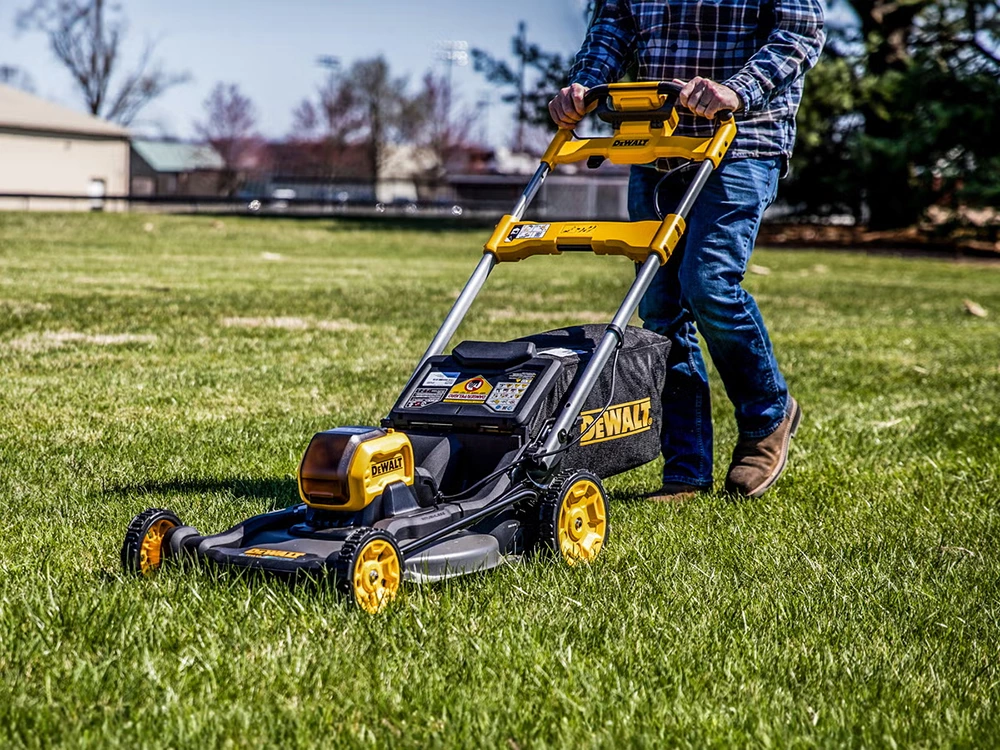
For many homeowners, yes. If your lawn is relatively flat, the grass is cut regularly, and the mowing session is not unusually long, an electric mower can be an excellent fit. In that kind of environment, users usually appreciate four things most:
- Easy push-button startup
- Lower noise
- Reduced routine maintenance
- A cleaner, less messy ownership experience
But real-world mowing conditions are often more demanding than the marketing photos suggest. Once you introduce thick spring growth, damp grass, rough ground, slopes, long working windows, low-clearance obstacles, or large site acreage, performance becomes more dependent on machine design than on the power source category alone.
Who Should Buy an Electric Lawn Mower—and Who Should Skip It?
Electric Lawn Mowers Are Usually a Good Fit If:
- You maintain a small to medium lawn
- Your terrain is flat or only mildly uneven
- You mow on a regular schedule instead of cutting overgrown grass
- You care about lower noise and easier maintenance
- You want a simpler ownership experience than gas equipment typically offers
An Electric Lawn Mower May Not Be the Best Fit If:
- You frequently mow wet, tall, or dense grass
- You manage steep hills, embankments, or unstable ground
- You need extended commercial-duty mowing efficiency
- You work in orchards, solar farms, flood channels, rough open land, or mixed brush conditions
- Operator safety and remote-distance control are important parts of the job
Professional Comparison: Where Electric Mowers Win and Where They Lose
| Decision Factor | Electric Lawn Mower | Professional Reality |
|---|---|---|
| Noise | Usually quieter than gas | Strong advantage for neighborhoods, public-facing sites, and comfort-sensitive environments |
| Startup and ease of use | Usually very convenient | A major reason many homeowners prefer electric |
| Routine maintenance | Usually lower than gas | Good fit for users who want fewer engine-related maintenance tasks |
| Long continuous mowing sessions | Can become limiting | Battery management, recharge planning, and workload intensity matter more on larger sites |
| Wet grass and thick growth | Performance often declines | One of the most common situations where consumer electric mowers disappoint |
| Steep slopes and rough terrain | Usually not ideal | Traction, stability, and operator safety become far more important than convenience |
| Commercial vegetation control | Sometimes workable, often limited | Site-specific equipment is often a better long-term solution |
Are Electric Lawn Mowers Worth It Long Term?
For many buyers, yes. But “worth it” depends on what you are comparing them against. If your alternative is a traditional gas mower for a typical residential lawn, electric can be an excellent value because it reduces hassle. If your alternative is a professional remote-controlled mower built for dangerous, wet, or complex terrain, the answer changes.
Why They Often Are Worth It
- They reduce ownership friction
- They are often quieter and cleaner to operate
- They usually make sense for routine home mowing
- They can deliver strong cutting performance in appropriate conditions
Why They Are Not Always Worth It
- Their convenience advantage can disappear in difficult terrain
- Battery planning becomes more important on larger sites
- Heavy grass, wet growth, and rough land often expose their limitations
- In commercial work, the wrong mower can cost more in lost efficiency than it saves upfront
Electric vs. Gas Lawn Mowers: Which Is Better?
This is one of the most common follow-up questions, and it is directly related to whether electric mowers are “any good.” In general, battery models are quieter and easier to maintain, while gas can still retain advantages in some heavier-duty or long-runtime use cases.
| Category | Electric | Gas |
|---|---|---|
| Noise | Better | Louder |
| Startup | Easier | Usually less convenient |
| Routine maintenance | Usually lower | Usually higher |
| Point-of-use emissions | Better | Worse |
| Extended heavy-duty mowing | Depends heavily on battery and workload | Often stronger in continuous use |
| Typical homeowner convenience | Often better | Usually lower |
The key takeaway is this: electric is often better for ordinary home mowing, while the “best” answer for difficult or large-scale work may be neither a standard electric mower nor a standard gas mower, but a more specialized machine built for the terrain.
Corded vs. Cordless Electric Lawn Mowers
Another useful distinction is corded versus cordless. Corded electric mowers can still make sense for small, simple lawns where a power outlet is close by and users want continuous runtime without battery management. But for most modern buyers, cordless battery mowers are the real comparison point because they offer far more freedom of movement. That is why most “are electric lawn mowers worth it?” conversations today are really about battery-powered models rather than corded ones.
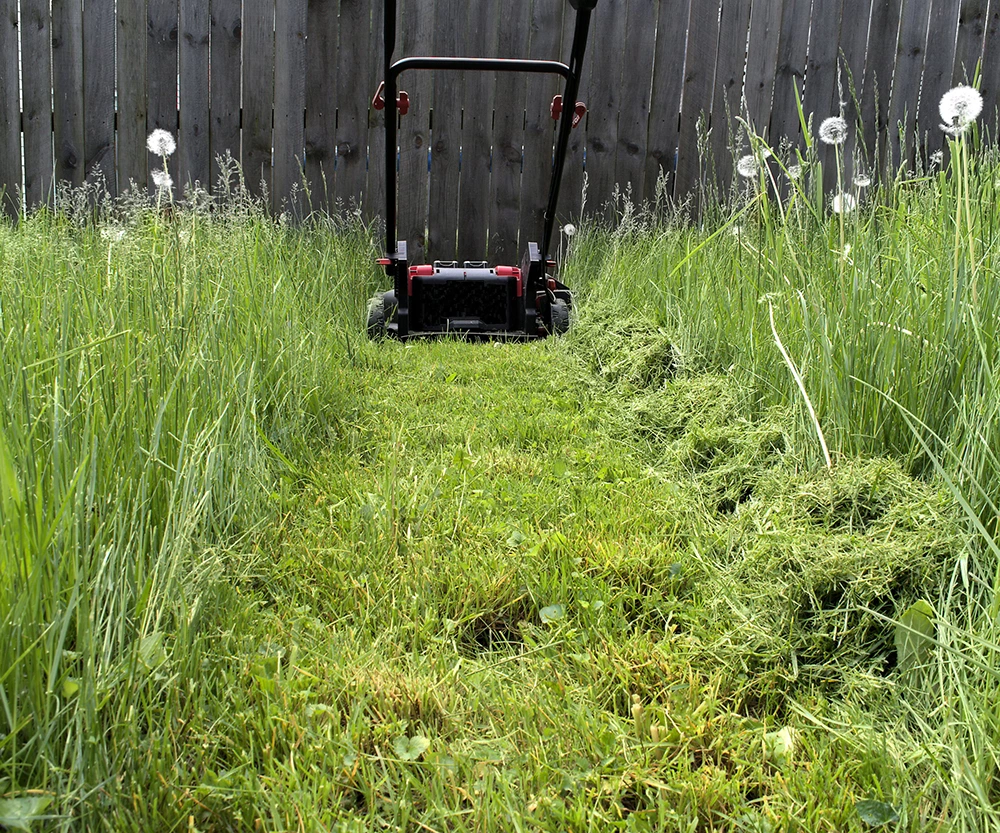
When Electric Mowers May Not Be the Best Choice
Electric mowers work well in many residential scenarios, but their performance becomes more variable as conditions become more demanding.
For larger lawns or longer mowing sessions, factors like battery runtime, load from self-propel systems, and grass density start to affect efficiency. In these cases, the decision is less about whether the mower is electric and more about how efficiently it can handle sustained work.
Terrain also plays a critical role. On slopes or uneven ground, priorities shift from convenience to traction, stability, and operator safety. Under these conditions, standard residential mowers—regardless of power type—are often not the ideal solution.
Challenging vegetation introduces another layer of complexity. Wet grass, dense growth, and neglected areas increase cutting resistance and can quickly expose the limitations of typical consumer machines. Here, the more relevant distinction is not electric versus gas, but whether the equipment is designed for light-duty mowing or professional vegetation management.
For commercial or semi-commercial environments such as orchards, solar farms, or large open landscapes, the focus moves even further toward productivity and safety. Machine capability, terrain adaptability, and control methods—such as remote operation—often matter more than how the mower is powered.
When a Remote-Controlled Mower Is the Better Choice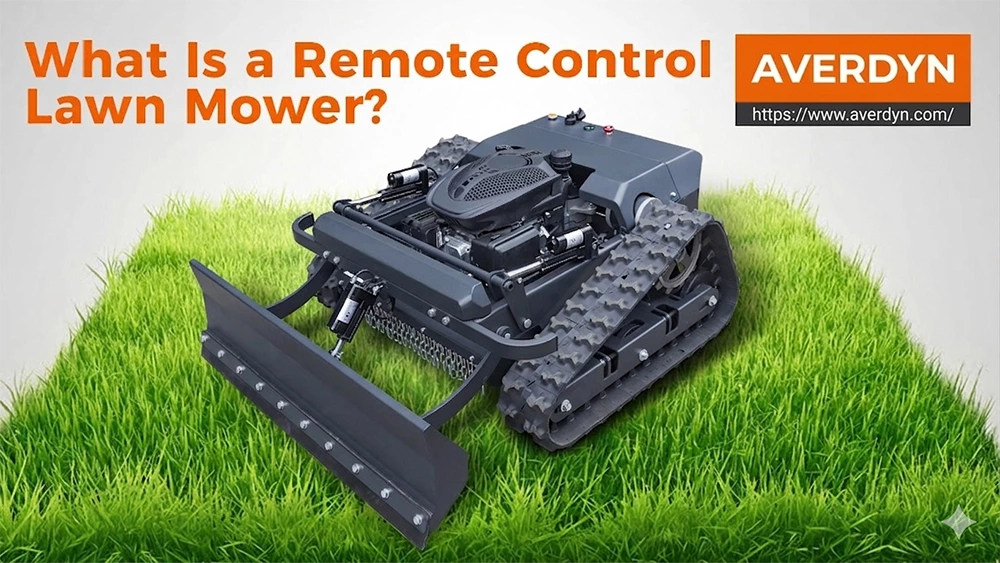
This is where Averdyn’s product range fits naturally into the decision process. If your site conditions go beyond a normal home lawn, a remote-controlled mower can solve problems that a standard walk-behind electric mower cannot solve well.
Matching the Right Equipment to Real-World Conditions
Choosing the right mower depends less on category labels and more on the conditions the machine needs to handle.
For larger properties such as estates, parks, farms, or mixed-use land, mowing efficiency and ease of operation become more important than basic specifications alone. In these cases, a remote-controlled mower with a wider cutting width and adjustable height can improve productivity while making operation easier and safer. A solution like Averdyn’s Sliding Four-wheel Drive Remote-controlled Lawnmower 550W Series is designed for this type of workload, especially where larger coverage and more flexible control are needed.
When the site includes slopes, uneven ground, orchards, or rough outdoor terrain, traction and stability matter more than standard residential mower features. In these environments, tracked mower designs are often the more practical choice because they offer stronger climbing ability and better control. Averdyn’s tracked mower lines are positioned for exactly these conditions, where conventional walk-behind machines may struggle.
If the challenge is wet grass, dense vegetation, brush, or neglected ground, the main issue is no longer convenience but cutting capability. For heavier outdoor work, a flail-style tracked mower is often a better fit than a typical residential electric mower. Averdyn’s Triangular Track Flail Series is intended for this kind of demanding vegetation management, where stronger cutting performance is required.
For obstacle-heavy or specialized mowing layouts, maneuverability becomes the key factor. In these situations, a compact tracked solution with obstacle-handling capability can improve efficiency in areas where standard mowing paths are difficult to maintain. Averdyn’s Obstacle Avoiding Lawn Mower is a relevant option for this type of environment.
A Real-World Example: Why Standard Electric Mowers Are Not Enough for Some Sites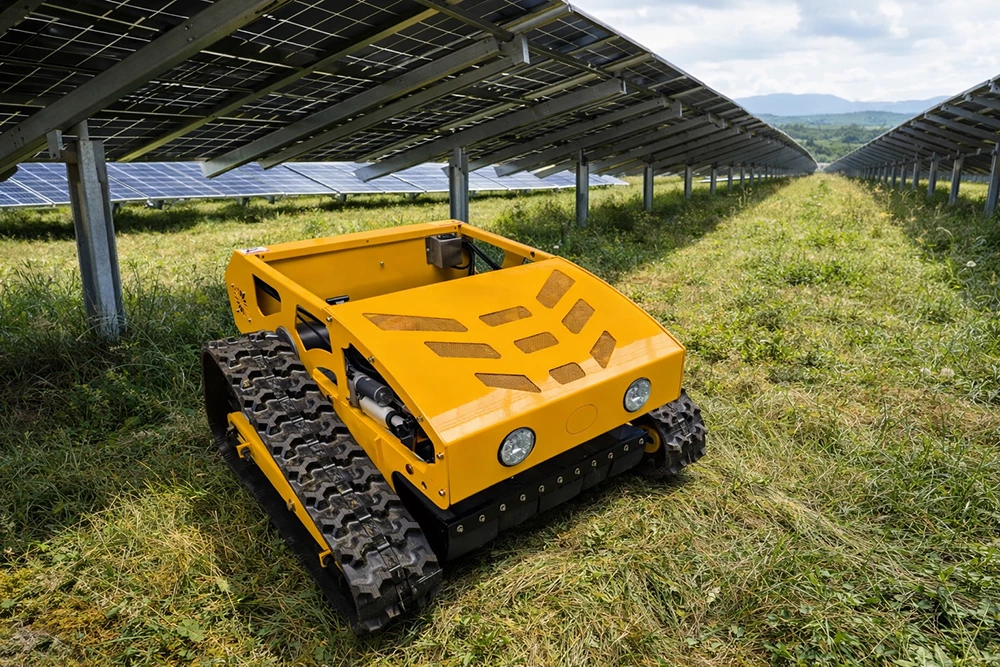
Averdyn’s New Zealand mountain solar power plant case is a strong example of where the electric-mower conversation needs more nuance. According to the case page, the site covers approximately 1,200 acres, has solar-panel clearance as low as 30 cm, and includes uneven mountainous terrain. Those conditions make conventional mowing equipment unsuitable. In that project, Averdyn positions its remote tracked solution as a way to operate under low-clearance panels, manage rough slopes more safely, and improve vegetation-control efficiency in a site where manual and conventional mowing were poor fits.
This is exactly why many buyers searching general questions such as are electric lawn mowers any good are actually asking the wrong question. The more useful question is: what type of mower is right for my terrain, risk profile, and workload?
Comparison Matrix: Standard Electric Mower vs. Averdyn Remote-Controlled Solution
| Use Case | Standard Electric Lawn Mower | Averdyn Remote-Controlled Solution |
|---|---|---|
| Small flat residential lawn | Usually a very good fit | Optional, mainly for users who prefer remote operation or premium flexibility |
| Large estates and mixed-use landscapes | Possible, but efficiency becomes more variable | 550W Four-wheel Drive Series offers stronger terrain adaptability and safer operation |
| Steep hills and dangerous slopes | Usually not ideal | Tracked remote mowers are the better solution for stability and distance control |
| Wet grass and dense vegetation | Performance often declines under heavy load | Triangular Track Flail Series is better suited for demanding vegetation management |
| Solar farms and low-clearance mowing | Usually inefficient or impractical | Solar-farm remote mowing solutions are better aligned with the task |
| Obstacle-heavy layouts | Limited adaptability | Obstacle Avoiding Lawn Mower improves site navigation and control |
Risk and Buying Considerations
When choosing a lawn mower, it is important not to rely too heavily on category labels. “Electric” does not automatically mean better—it simply means different. The right choice depends on your specific conditions, including terrain, grass type, slope, and how the equipment will actually be used.
Performance expectations also need to be realistic. Runtime, for example, is not a fixed number. It changes depending on factors such as battery capacity, deck size, grass density, moisture, and workload intensity. Under demanding conditions, advertised figures often become less meaningful.
It is also worth separating comfort from capability. A quieter machine improves the user experience, but it does not necessarily indicate higher performance. In more challenging environments, factors like traction, stability, and cutting power become far more important.
Ultimately, terrain should guide the decision. For properties with slopes, rough ground, orchards, or infrastructure constraints, machine design and control method tend to matter more than whether the mower is electric or gas.
Final Answer: Are Electric Lawn Mowers Worth It?
Electric lawn mowers are an excellent choice for many users, especially for small to medium lawns with regular maintenance needs. They offer a quieter, simpler, and lower-maintenance experience, and in these scenarios, they are often well worth the investment.
However, they are not the best fit for every situation. In more demanding environments—such as steep slopes, wet or dense vegetation, large estates, or commercial sites—the focus shifts toward safety, efficiency, and terrain capability.
In these cases, choosing equipment designed specifically for those conditions is more important than choosing a power type. For example, a remote-controlled mower is not just a convenience upgrade—it can significantly improve operational safety, productivity, and overall suitability for complex terrain.
FAQ
Are electric lawn mowers any good?
Yes. Electric lawn mowers are a very good choice for many homeowners and light-duty users because they are quieter, easier to start, and usually easier to maintain than gas mowers. They are best suited to small to medium lawns with regular mowing schedules.
Are electric lawn mowers worth it?
They are often worth it for buyers who value lower noise, easier ownership, and reduced routine maintenance. They become less compelling when mowing conditions include steep slopes, wet grass, rough terrain, or long commercial-duty work.
Are electric mowers good for large lawns?
They can be, but efficiency becomes more variable as site size and workload increase. Larger lawns and longer mowing sessions make battery planning and overall productivity more important.
Are electric lawn mowers good on hills?
Basic walk-behind electric mowers are usually not the best choice for steep hills. On slopes, traction, stability, and operator safety become more important, which is why tracked or remote-controlled mowers are often a better fit.
Are electric lawn mowers good in wet grass?
They may work in lightly damp grass, but performance often declines as grass becomes wetter, denser, or taller. For repeated wet-grass mowing or heavy vegetation, a more specialized professional mower is usually a better option.
What is a better alternative when a standard electric mower is not enough?
A remote-controlled mower is often a better alternative for slopes, rough terrain, orchards, solar farms, wet grass, and large vegetation-management sites because it offers better safety, stronger terrain adaptability, and improved site fit.
What are the drawbacks of electric mowers?
The main drawbacks of electric mowers are limited runtime, weaker performance in wet or overgrown grass, and lower suitability for steep slopes or long commercial-duty mowing. They are usually best for small to medium lawns with regular mowing schedules.
Is it better to get an electric or gas lawn mower?
It depends on your lawn size, terrain, and mowing conditions. Electric mowers are usually better for homeowners who want lower noise, easier maintenance, and simple operation. Gas mowers can still have advantages in longer, heavier-duty mowing, while remote-controlled mowers are often better for slopes, rough terrain, and dense vegetation.
How many years does an electric lawn mower battery last?
In many cases, an electric lawn mower battery lasts around 3 to 5 years, depending on battery quality, charging habits, storage conditions, and how often the mower is used. Proper charging and off-season storage can make a meaningful difference in battery lifespan.
Need More Than a Standard Electric Lawn Mower?
If your project involves slopes, wet grass, low-clearance mowing, solar farms, orchards, rough terrain, or high-output vegetation management, a remote-controlled mower may be the better long-term solution.
Explore Averdyn’s remote-controlled lawn mower range, including tracked and four-wheel-drive solutions for challenging outdoor environments. For a recommendation based on your terrain, mowing conditions, and working requirements, contact Averdyn for model selection, pricing, or OEM/ODM cooperation.